How Much Gravel Do I Need? Depth Guide + Free Gravel Calculator
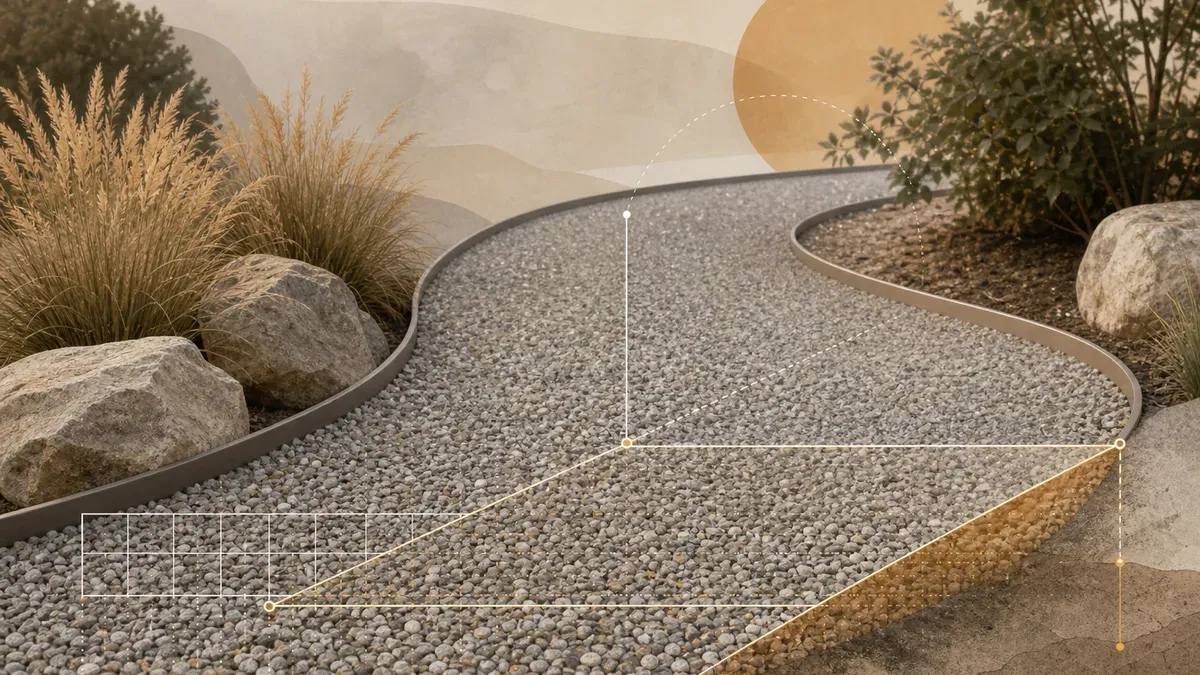
Ordering gravel by guesswork usually means a second delivery — or a leftover pile you paid for. A free gravel calculator converts your area and depth into cubic yards and tons so you can order the right amount the first time.
Below you will find recommended depths for common projects, the volume formula suppliers use, and a simple way to estimate weight and cost before you call the yard.
Estimate gravel before you order
Get cubic yards and tons from length, width, and depth — free and private.
How to Calculate Gravel Volume
Measure the length and width of the area, then decide how deep the gravel layer should be. Convert depth from inches to feet by dividing by 12.
Example: A driveway 40 ft long × 12 ft wide × 4 inches deep (0.333 ft) needs about 160 cubic feet, or roughly 5.9 cubic yards.
Recommended Gravel Depth by Project
- Driveways: 4–6 inches of compacted base gravel is typical.
- Walkways / paths: 2–3 inches is usually enough for foot traffic.
- Decorative beds: 1.5–2 inches for coverage without burying plants.
- French drains / drainage: Depth depends on trench design — follow your drainage plan, not a one-size rule.
From Cubic Yards to Tons
Suppliers often sell by the ton. Convert volume to weight using density:
The 1.4 factor is a common average for dry gravel. Ask your supplier for the density of your specific stone — crushed rock and wet loads can run heavier.
Before you place the order
- Measure twice — especially depth after grading or excavation.
- Add 5–10% for compaction and irregular edges.
- Use the ToolMars gravel calculator to get yards, tons, and an optional cost estimate.
Estimate gravel before you order
Get cubic yards and tons from length, width, and depth — free and private.
Frequently Asked Questions
How do I calculate how much gravel I need?
Multiply length × width × depth, convert to cubic yards (÷ 27 from cubic feet), then multiply by density (~1.4 tons/yd³) for weight.
How deep should gravel be for a driveway?
Most driveways use 4–6 inches of base gravel. Paths often need 2–3 inches.
How many tons are in a cubic yard of gravel?
About 1.4 tons for typical dry gravel. Confirm density with your supplier.
Should I order extra gravel?
Yes — an extra 5–10% covers compaction and uneven areas.
Can I use a gravel calculator for crushed stone or pea gravel?
Yes. Volume is the same; change the density to match your material.