Grams to Tablespoons & Teaspoons: The Accurate Conversion Guide
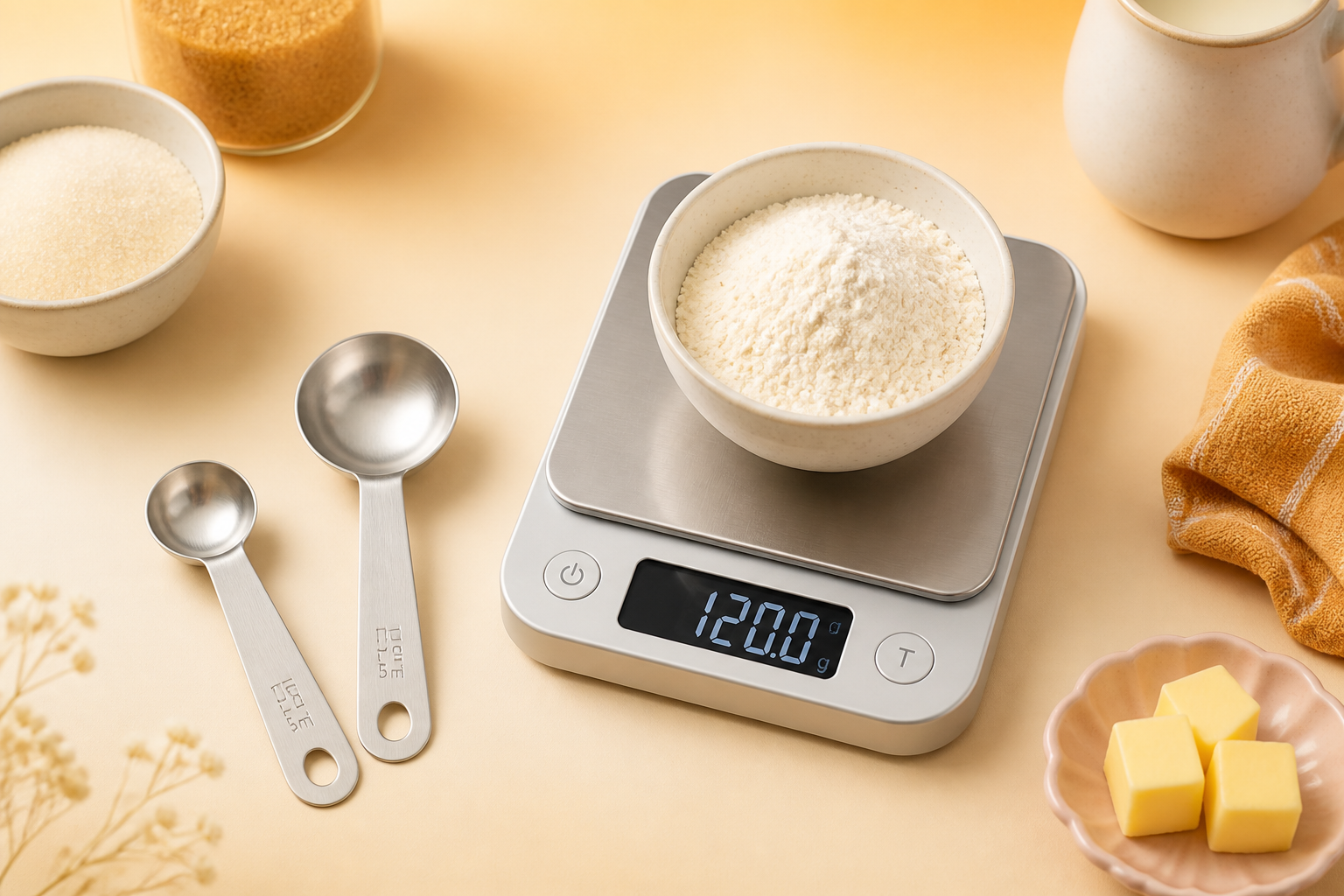
Every recipe calls for grams, tablespoons, or teaspoons — but not all ingredients convert the same way. A tablespoon of butter weighs 14.2 grams, while a tablespoon of all-purpose flour weighs only 7.8 grams. Using a generic "15g = 1 tbsp" rule will ruin your baking. The free gram to spoon converter on ToolMars uses real density data for 35+ ingredients so your conversions are actually correct.
Whether you are scaling a European recipe that uses grams, working without a kitchen scale, or just need a quick reference while shopping — here is everything you need to know about converting between grams and spoons.
Accurate density-based conversions for 35+ ingredients
Free gram-to-spoon converter — tablespoons, teaspoons, and reverse mode.
Why Generic Gram-to-Spoon Converters Are Wrong
Most online converters treat all ingredients identically — they divide your grams by 15 (the weight of one tablespoon of water) and call it done. This works for water and thin liquids, but fails badly for anything else.
How much 1 tablespoon really weighs
- All-purpose flour: 7.8g per tablespoon — nearly half the weight of water
- Granulated sugar: 12.5g per tablespoon — denser packing than flour
- Butter: 14.2g per tablespoon — close to water but not identical
- Honey: 21g per tablespoon — 40% heavier than water due to high sugar density
- Cocoa powder: 5.4g per tablespoon — very light and airy
If a recipe calls for 100g of flour and you use a generic converter, you will get about 6.7 tablespoons. The real answer is closer to 12.8 tablespoons — nearly double. That difference can turn a cake into a brick.
Common Gram-to-Spoon Conversions for Baking
Here are the most-searched conversions for everyday baking ingredients. All values are for level (flat) spoons.
100g flour = 12.8 tbsp = 38.5 tsp
100g sugar = 8.0 tbsp = 24.0 tsp
100g butter = 7.0 tbsp = 21.1 tsp
100g cocoa = 18.5 tbsp = 55.6 tsp
100g honey = 4.8 tbsp = 14.3 tsp
Notice how 100g of cocoa needs nearly 19 tablespoons while 100g of honey is less than 5. This is why ingredient-specific density data matters.
When to Use Spoons vs a Kitchen Scale
Professional bakers always recommend weighing ingredients on a scale for precision. But spoon measurements are perfectly practical in these situations:
- Small quantities of spices, leaveners, and extracts (under 20g)
- Quick cooking (not precision baking) where a few grams off does not matter
- Travel or outdoor cooking when you do not have a scale
- Following American recipes that list spoon measurements but you want the gram equivalent
Tips for Accurate Spoon Measurements
Measurement best practices
- Level the spoon: use a knife or finger to scrape off the excess for a flat, even measurement
- Do not pack flour: scoop gently or spoon flour into the measuring spoon to avoid compressing it
- Pack brown sugar: unlike flour, brown sugar should be firmly packed into the spoon for accurate weight
- Use standard spoons: actual measuring spoons, not dinner silverware — tableware spoons vary wildly in size
Accurate density-based conversions for 35+ ingredients
Free gram-to-spoon converter — tablespoons, teaspoons, and reverse mode.
The ToolMars Gram to Spoon Converter
The ToolMars gram to spoon converter includes 37 ingredients across 7 categories — flours, sweeteners, baking staples, fats, spices, dairy and liquids, grains, and nut butters. It also works in reverse: enter the number of spoons to get the gram weight. A quick-reference table shows 10 common gram amounts for whichever ingredient you select. Everything runs locally, with no sign-up required.
Bottom Line: Density Beats Generic Rules
Ingredient-specific conversions prevent baking disasters. For menu costing with those same ingredients, use the food cost calculator to see cost per serving and target food cost percentage.
Frequently Asked Questions
Why can't I just divide grams by 15?
15g per tablespoon only applies to water. Flour, sugar, and other ingredients have different densities, so the weight per spoon varies significantly.
Are these level or heaped spoons?
All values are for level (flat) tablespoons and teaspoons — the standard in recipe writing.
Can I convert spoons to grams?
Yes — click the reverse button to switch directions and enter spoon counts instead.
Is this accurate for baking?
Yes, for common ingredients the densities match standard culinary references. For maximum precision, pair spoon conversions with a kitchen scale.
Why do different ingredients give different spoon counts?
Density. Light ingredients like flour take up more volume per gram than dense ones like honey or salt.